

Top Feed

Zygmunt Bauman obituary

Zygmunt Bauman’s Century

ICE wants to treat deportations like a business – history warns us against that

Zygmunt Bauman’s liquid politics

Zygmunt Bauman, philosopher: “The art of breaking off relationships and emerging unscathed far surpasses the a

Zygmunt Bauman: “Social media are a trap”

From solid to liquid to digital: Zygmunt Bauman and the metamorphosis of identity
In the Swarm: The Liturgy and Liquid Identity
Zygmunt Bauman's concept of "liquid modernity" is one of my recurring topics of exploration. To put it briefly, our age prizes flexibility...
Zygmunt Bauman obituary
The Polish-born sociologist Zygmunt Bauman, who has died aged 91, deployed a metaphor since taken up by the anti-globalisation movement around the world.
Zygmunt Bauman’s Century
Polish-British sociologist Zygmunt Bauman was born 100 years ago today. He is best known as the theorist of “liquid...
ICE wants to treat deportations like a business – history warns us against that
In 'Modernity and the Holocaust,' Jewish social theorist Zygmunt Bauman wrote about how rationalization can dehumanize a society's citizen.
Zygmunt Bauman’s liquid politics
Spread over more than 50 books, the tenets of “Baumanism” take their cue from Gramsci: an attempt to reckon with a capitalism more complex and...
Zygmunt Bauman, philosopher: “The art of breaking off relationships and emerging unscathed far surpasses the a
Zygmunt Bauman, winner of Spain's Prince of Asturias Award for Communication and Humanities in 2010, was a philosopher and sociologist who...
Zygmunt Bauman: “Social media are a trap”
Zygmunt Bauman: “Social media are a trap.” The Polish-born sociologist is skeptical about the possibilities for political change.
From solid to liquid to digital: Zygmunt Bauman and the metamorphosis of identity
Bauman's analysis is crucial, for it precisely frames the evolution of social existence from the stable, hierarchical "solid" phase, through the...
You're caught up.
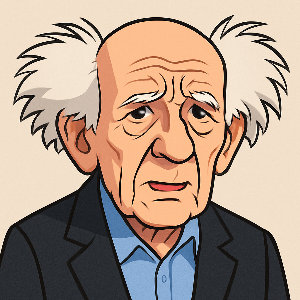
Zygmunt Bauman
@ZygmuntBauman
1738
Stats
70850
Rank
1.7K
Points
0
Videos
8
Articles
0
Reviews
0
Comments
About
A sociologist who often addressed issues related to Poland's social and political landscape, focusing on critiques of modernity.