
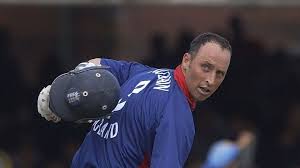
Why Many Indian Fans Don’t Like Nasser Hussain — And Why It’s Different From Other Foreign Commentators
Indian cricket fans are often accused of being overly sensitive to criticism. But that argument falls apart when you look at how warmly Indians embrace many former players and commentators from England, Australia, and South Africa. Names like Michael Holding, Ian Bishop, Kevin Pietersen, Ricky Ponting, Shane Warne, Michael Clarke, AB de Villiers, and even Sunil Gavaskar’s long-time rivals are widely respected in India.
So why does Nasser Hussain stand out as an exception?
The answer lies less in what he says and more in how, how often, and the context in which he says it.
A Pattern That Stuck Over Time
The discomfort with Hussain did not start recently. It has built up over decades, shaped by a few key moments that many Indian fans still remember.
First, in 2001, Hussain publicly criticised British Asians for supporting India or Pakistan instead of England. While his frustration may have come from a captain’s emotional point of view, many felt the comment ignored the reality of racism and exclusion faced by ethnic minorities in England. To Indian fans, it sounded less like sporting disappointment and more like moral lecturing about loyalty.
Then in 2011, during a match involving India, Hussain referred to some Indian fielders as “donkeys.” While he later framed it as a comment on fielding standards, the choice of words mattered. In a sport already sensitive to racial and cultural undertones, the remark felt unnecessary and insulting. Other commentators criticise Indian fielding too, but they usually do so without language that feels demeaning.
Most recently, in 2026, his comments around the T20 World Cup controversy reignited old tensions. Hussain questioned whether the ICC would treat India the same way as Bangladesh or Pakistan in similar political situations, and argued that India’s power in world cricket creates imbalance. While this criticism was about governance and influence, many Indian fans saw selective outrage. They pointed out that England itself had previously boycotted matches and influenced decisions for political reasons, with far less criticism from Hussain at the time.
Why Indians Accept Criticism From Others
Indian fans are not against criticism. In fact, they often welcome tough analysis when it feels fair and consistent. Commentators like Michael Holding or Ricky Ponting criticise India just as bluntly—but they are perceived as doing so evenly, without repeatedly singling India out or adopting a lecturing tone.
What frustrates fans about Hussain is the frequency and framing. His criticism often sounds less like analysis and more like moral judgement. Over time, that creates a feeling of bias, even if none is intended.
Not About Race or Religion
It is important to be clear: there is no verified evidence that Hussain has spoken negatively about Hindus, Indians as a people, or Black communities. In fact, he has spoken openly about facing racism himself and has supported anti-racism efforts in cricket, including Black Lives Matter and discussions around institutional racism in England.
The backlash against him in India is not about religion or ethnicity. It is about tone, context, and perceived double standards.
The Real Issue: Trust
Cricket commentary is built on trust. Fans accept harsh words when they believe the speaker is fair. Over the years, many Indian fans have simply stopped giving Hussain that benefit of the doubt. Each new comment is heard through the filter of past moments, making even valid criticism feel loaded.
That is why Indians can adore many foreign cricketers and commentators—and still strongly dislike one particular voice.
In the end, this isn’t about hate. It’s about a relationship that never recovered from early missteps, and a pattern that keeps reopening old wounds.
Comments (1)