
The recent diplomatic activity between the Philippines and China has triggered a wave of headlines claiming that the two countries are “mending ties.” On the surface, it is easy to understand why people are saying that. There have been multiple meetings between officials in 2026, discussions around trade, tourism, direct flights, energy cooperation, and repeated statements about improving communication. Philippine President Ferdinand Marcos Jr. has even spoken about creating a “new normal” in relations with Beijing. But despite all this diplomatic activity, the reality is far less dramatic than the headlines suggest. The Philippines is not truly reconciling with China. It is simply trying to maintain a workable relationship while protecting its own interests. And even that limited goal may prove extremely difficult to sustain.
The reason the Philippines is engaging diplomatically with China is not complicated. China remains one of the region’s largest economic powers and an important trading partner. Tourism, investment, and regional stability all matter to Manila, especially at a time when global economic conditions remain uncertain. The Philippines also serves as the ASEAN chair in 2026, which naturally increases pressure to maintain diplomatic balance and avoid constant escalation. From Manila’s perspective, maintaining dialogue with Beijing is practical statecraft rather than ideological alignment. Every country in Southeast Asia understands that geography cannot be changed. China will remain a dominant regional power regardless of political disagreements. Completely cutting off engagement is neither realistic nor beneficial for the Philippine economy.
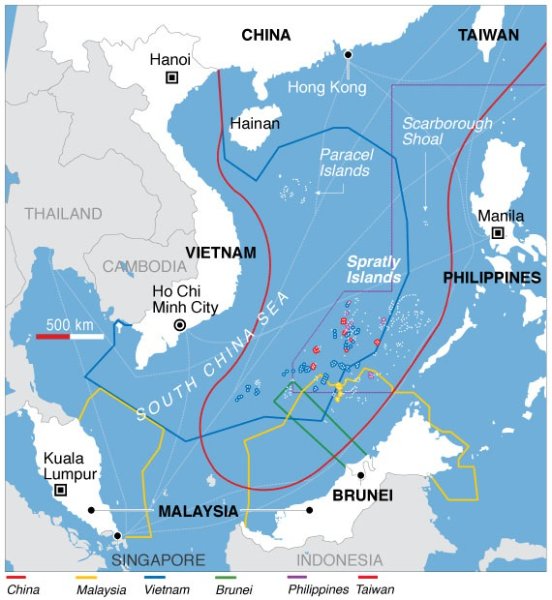
However, diplomacy alone does not mean relations are genuinely improving. The core issue between the two countries remains entirely unresolved: the South China Sea. China continues to assert expansive claims through its “nine-dash line,” despite the 2016 international arbitral ruling rejecting those claims. The Philippines continues to reject Beijing’s position and insists on its sovereign rights within its exclusive economic zone. Nothing about this fundamental disagreement has changed. More importantly, Chinese actions in disputed waters have not significantly softened despite the recent diplomatic outreach. Philippine vessels continue to face harassment, blocking maneuvers, water cannon incidents, and aggressive coast guard activity. Maritime militia operations remain active near disputed areas, and confrontations continue even after temporary understandings between the two governments. This is the biggest reason why claims about “mending ties” feel disconnected from reality. Diplomatic meetings lose credibility when tensions at sea continue almost immediately afterward.
Trust is another major obstacle. The Philippines has already experienced a previous phase of warmer relations with China during the Rodrigo Duterte administration. At the time, many believed that a softer stance toward Beijing would reduce tensions and unlock major economic opportunities. Some investments and agreements were announced, but many promised infrastructure projects moved slowly or failed to materialize at the expected scale. Meanwhile, maritime incidents never truly stopped. For many Filipinos, that period reinforced the belief that China’s economic outreach often comes without meaningful compromises on territorial disputes. As a result, skepticism toward Beijing has increased significantly among the public, security establishment, and large parts of the political class. Any Philippine government that appears too accommodating toward China risks strong domestic backlash.
Another reason why genuine reconciliation is unlikely is the Philippines’ growing security relationship with the United States and its allies. Over the past few years, Manila has expanded defense cooperation with Washington through increased EDCA base access, larger military exercises, and stronger coordination with countries like Japan and Australia. These are not the actions of a country preparing to pivot toward China. They are the actions of a country attempting to strengthen deterrence while simultaneously managing tensions diplomatically. From Beijing’s perspective, these moves are viewed as part of a broader US-led containment strategy in the Indo-Pacific. From Manila’s perspective, they are necessary security measures in response to growing Chinese pressure in the South China Sea. This strategic contradiction makes any long-term “reset” extremely difficult.
The Marcos administration is essentially trying to balance two competing realities. On one hand, the Philippines cannot afford endless confrontation with China because economic stability and regional diplomacy still matter. On the other hand, it cannot politically or strategically compromise on sovereignty issues in the West Philippine Sea. That balancing act explains why Manila continues talking to Beijing while simultaneously deepening military cooperation with the United States. This is not a contradiction; it is a hedging strategy. The Philippines is attempting to reduce immediate tensions without giving up its long-term strategic position.
The deeper problem is that the long-term goals of both countries remain fundamentally incompatible. China wants greater regional dominance and expanded maritime control. The Philippines wants its internationally recognized maritime rights respected under international law. Those positions do not naturally align. As long as Beijing continues using gray-zone tactics while also calling for cooperation, distrust will remain deeply entrenched. The likely outcome is not reconciliation, but a repetitive cycle of diplomatic talks, temporary de-escalation, another maritime incident, renewed tensions, and then another round of talks again. In other words, a tense and transactional relationship rather than a genuinely repaired one.
So are the Philippines and China truly mending ties? The answer is clearly no. The Philippines is simply trying to maintain a manageable working relationship while protecting its sovereignty and strengthening alternative security partnerships. That approach is pragmatic and probably necessary. But real reconciliation would require a major change in Chinese behavior in the South China Sea, and there is little evidence that such a shift is happening. Until that changes, the relationship between the two countries will remain cautious, fragile, and built more on necessity than trust.
Comments (4)